
OFFICIAL USC INTERNATIONAL COURSE HOST · NOW IN AUSTRALIA
The University of Southern California Sensory Integration Certificate Program has landed to CoordiKids.
Continuing education in sensory integration theory, standardised assessment and intervention — developed at USC’s Chan Division of Occupational Science and Occupational Therapy, the academic home of Dr. A. Jean Ayres. Delivered online, the certification is offered internationally — and CoordiKids is proud to be USC’s first official course host in Australia.
“Developed by USC Faculty Emeritus A. Jean Ayres — occupational therapist, educational psychologist, and the originator of sensory integration theory.”
THE FOUNDATION
Dr. Ayres’ publications on sensory integration span three decades, from the 1960s through the 1980s, spanning psychometric studies, clinical trials and single-case series. Her framework, standardised tests and clinical approach remain the theoretical foundation for the field today.
USC has taught this material continuously since 1977, beginning with Dr. Ayres’ own hands-on course, OT 610. Over 45 years of continued development, USC’s Chan Division remains committed to upholding that legacy — and now offers it as a continuing education program both in the United States and internationally.
PROGRAM FACULTY
Taught by leaders in the field.
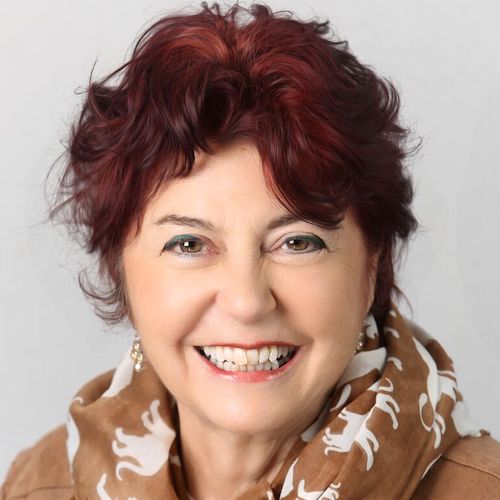
Erna Imperatore Blanche, PhD, OTR/L, FAOTA
Professor of Clinical Occupational Therapy, USC Chan Division of Occupational Science and Occupational Therapy
A leading authority in paediatric occupational therapy, Dr. Blanche’s work is grounded in occupational science and Ayres Sensory Integration theory. She has authored and co-authored numerous books, standardised assessments and clinical video series on sensory integration — including An Evidence-Based Guide to Combining Interventions with Sensory Integration in Pediatric Practice and the SOSI–M assessment — and has lectured in more than 30 countries. She also co-founded Therapy West, Inc., a Los Angeles paediatric clinic now serving more than 500 children a week.
PhD, Occupational Science — USC · MA, Occupational Therapy — USC · MA, Special Education — Columbia University
THE PROGRAM
Four courses. One sequential pathway.
The full certification is completed in order — Course 1 through Course 4. Each course includes assignments and a quiz that participants must pass before progressing to the next.
Course 1 – Online
Oct 21 – Nov 25, 2026
Theoretical Foundations of Sensory Integration. Open to all professionals, and to parents of children with neurodevelopmental disabilities.
Instructors: Erna Blanche PhD, OTR/L, FAOTA; Stefanie Bodison, OTD, OTR/L; and Emily C. Sweiss PhD, OTR/L
US$890
Course 2 – Online
Feb 8 – Mar 15, 2027
Builds on Course 1. Restricted to eligible therapists progressing through the certification.
Instructors: Erna Blanche, PhD, OTR/L, FAOTA and Merry Lee OTD, OTR/L
US$650
Course 3 – Online
May 21 – Jun 18, 2027
Sensory Integration Treatment. COTAs may attend under the supervision of a qualified OT.
Instructors: Erna Blanche, PhD, OTR/L, FAOTA and Thomas Decker EdD, OTD, OTR/L
US$650
Course 4 – Online
Jul 19 – Aug 16, 2027
The final course in the series. Completion of all four qualifies you for the full Certificate.
Instructors: Erna Blanche PhD, OTR/L, FAOTA; Janet Gunter OTD, OTR/L; and Lisa Test OTD, OTR/L, FAOTA
US$890
Delivered online through USC’s learning platform (Brightspace), combining live synchronous sessions with self-paced coursework. An in-person option may be available if agreed between CoordiKids and USC.
THE CURRICULUM
What each course covers
Full official course descriptions from USC Chan, for anyone who wants the detail behind the four-step pathway above.
This course introduces the foundational neurobehavioral principles that underpin sensory integration theory, with a particular focus on the vestibular, tactile, and proprioceptive systems. Participants examine how these sensory systems contribute to functional performance and participation across everyday activities and occupations. Typical and atypical patterns of sensory integration are explored to illuminate how sensory processing challenges influence behavioral regulation and motor performance.
Contemporary research is used throughout the course to strengthen the connection between theoretical constructs and practical application. Through real case examples, participants learn to link sensory integration theory to challenges in participation and to differentiate between typical and atypical behaviors. By the end of the course, participants will understand the neurobehavioral basis of the major sensory systems, apply this knowledge to functional performance, identify sensory processing challenges that impact behavior and motor skills, and connect theoretical principles of sensory integration to assessment, identification, and intervention planning.
This course equips participants with the knowledge and skills needed to accurately assess sensory integration function and dysfunction in children. Participants explore a range of standardized and non-standardized assessment tools used to evaluate sensory processing and the functional areas affected by sensory integration challenges. Throughout the course, they refine their clinical observations and clinical reasoning to develop a comprehensive understanding of sensory differences across diverse clinical populations and the impact of these differences on functional performance.
Using real case examples, individual problem-solving exercises, group analysis, and guided discussion, participants learn to integrate contemporary research on sensory processing and sensory integration theory into their clinical reasoning. This applied approach supports the development of sound, evidence-informed assessment practices that enhance the identification of sensory processing challenges and inform intervention planning.
This course prepares participants to deliver intervention using a sensory integration frame of reference. Core strategies for intervention planning and clinical reasoning grounded in sensory integration principles are examined in depth. Participants explore approaches to sensory integration intervention across a range of clinical populations, with attention to how sensory processing differences shape functional performance and participation.
Through video analysis of actual clients, participants learn to apply sensory integration theory to identify the intervention target, therapeutic ingredients, and mechanisms of action that guide effective practice. Case reviews and structured problem-solving activities support the integration of knowledge from previous courses into interventions delivered primarily in individualized, specialized environments. Fidelity principles — drawn from contemporary research, Ayres’s original description of sensory integration intervention, and fidelity guidelines established by subsequent scholars and practitioners — are discussed to ensure accurate, evidence-aligned practice.
The Special Topics in Sensory Integration Intervention course examines the unique considerations involved in applying sensory integration principles across specific populations and practice settings. Participants explore sensory integration approaches for individuals on the autism spectrum, for children served in school-based programs, and for infants and toddlers in early intervention. The course also addresses alternative intervention methods appropriate for a range of ages and contexts.
Through individual exercises, active problem-solving, and collaborative group discussions, participants analyze complex cases and deepen their understanding of how sensory integration theory informs intervention planning in diverse environments. This applied format supports the development of flexible, evidence-aligned clinical reasoning tailored to varied practice demands.
WHO IT’S FOR
Built primarily for OTs — with room for the wider team.
Occupational therapists are given priority: at least 80% of participants in any course must be OTs. Here’s how eligibility breaks down.
Occupational Therapists
Theoretical Foundations of Sensory Integration. Open to all professionals, and to parents of children with neurodevelopmental disabilities.
Physical & Speech Therapists
Welcome to enrol in the full series alongside OTs, who are given enrolment priority in every course.
Parents & Other Professionals
Course 1 is open more broadly — including to parents of children with neurodevelopmental disabilities.
OT Students
May attend the program, but can’t receive the Certificate of Completion until they’ve graduated.
COTAs
Eligible for Course 1 in full. May take Course 3 under the supervision of a qualified occupational therapist.
The Certificate
A Certificate of Completion for each course passed. Finish all four and you’re eligible for listing in USC’s public database of SI certificate holders.
WHAT MAKES THIS DIFFERENT
Same evidence base. Wherever the child actually lives, learns and plays.
Several respected certification pathways exist, all rooted in Dr. Ayres’ work — many built around strict protocol fidelity in a specially-equipped clinic. The USC certification teaches the same core theory and assessment principles, with an emphasis on applying them flexibly, across a child’s everyday environments.
Training outside the clinic doesn’t mean it’s less rigorous or less evidence-based. It’s the same underlying Ayres theory and evidence base — what changes is where and how it’s applied.
INVESTMENT
Course pricing
Priced in USD, billed through CoordiKids.
Course 1 dates:
21st October to 25th November 2026
COURSE 1
US$890 *
COURSE 2
US$650 *
COURSE 3
US$650 *
COURSE 4
US$890 *
FULL FOUR-COURSE CERTIFICATION
US$3,080 **
The price of all four courses, paid individually.
* 10% GST will be added for Australian registrations.
** US$2,690 when the four-course price is paid in full — a saving of US$390.
RECOGNISED & ACCREDITED
Backed by USC Chan’s standing.
ACOTE-Accredited
USC Chan’s entry-level academic program
WFOT-Approved
World Federation of Occupational Therapists
WASC-Accredited
Institutional accreditation
* 10% GST will be added for Australian registrations.
** US$2,690 when the four-course price is paid in full — a saving of US$390.
QUESTIONS
Frequently asked questions
It’s a continuing education certificate program developed at USC’s Mrs. T.H. Chan Division of Occupational Science and Occupational Therapy — the academic home of Dr. A. Jean Ayres, who originated sensory integration theory. It covers the theory, standardised assessment, and intervention principles of sensory integration, and Coordikids is bringing it to Australia for the first time as an official International Course Host.
The full program is four courses, completed in sequential order (Course 1 → Course 2 → Course 3 → Course 4). Each course includes assignments and a quiz that participants must pass to progress.
Several respected certification pathways exist, all rooted in Dr. Ayres’ work. Many focus on delivering sensory integration intervention with strict protocol fidelity, traditionally practised in a specially-equipped clinic. The USC certification teaches the same core theory and assessment principles but with an emphasis on applying them flexibly, across the everyday environments where a child actually lives, learns, and plays.
The program is designed primarily for occupational therapists who’ve graduated from a government-recognised OT program — they’re eligible for the full course series and Certificate of Completion. Physical therapists and speech therapists can also enrol, though OTs are given priority: at least 80% of participants in any course must be OTs. OT students may attend but can’t receive the Certificate until they’ve graduated.
Yes — Course 1 is open more broadly to all professionals, as well as to parents of children with neurodevelopmental disabilities, even though Courses 2–4 are restricted to eligible therapists.
Online, through USC’s learning platform (Brightspace), combining live (synchronous) sessions with self-paced (asynchronous) coursework. An in-person option may be available if agreed between Coordikids and USC.
We mean school classrooms, the family home, community settings, telehealth/online consultations — as well as clinic, when clinic is the right fit. This is about equipping therapists (and the families/educators around the child) to support regulation wherever the child needs it, not only in a dedicated sensory gym.
No — it’s the same underlying Ayres theory and evidence base. What changes is where and how it’s applied.
A Certificate of Completion for each course you pass. Once you’ve successfully completed the full four-course series, you’re eligible to have your details added to USC’s publicly accessible online database of SI certificate holders.
Yes — Coordikids is proud to bring the USC Sensory Integration Certification to Australia for the first time, as USC’s official International Course Host here.
Sensory integration was originated by USC Faculty Emeritus A. Jean Ayres PhD, OTR, who was both an occupational therapist and an educational psychologist. Dr. Ayres developed a theoretical framework, a set of standardized tests and a clinical approach for the identification and remediation of sensory integration problems in children. Her publications on sensory integration span a 30-year period from the 1960s through the 1980s and include psychometric studies as well as clinical trials and single case series.
The USC Chan Division of Occupational Science and Occupational Therapy has a rich history of advanced training in sensory integration, starting with the initial hands-on course, OT 610, originally taught by Dr. Ayres through the University of Southern California beginning in 1977. Through continued development and refinement of the content and materials over the past 45 years, the Chan Division remains committed to upholding the legacy of Dr. Ayres’ work in the science and clinical application of sensory integration, and felt that this commitment was best served by offering a continuing education program on sensory integration in both the United States and internationally. While certain similar commercial trademarked programs may be in the marketplace, the underlying theory or techniques are not necessarily unique to those programs.
Yes, the USC Chan Division of Occupational Science and Occupational Therapy is an AOTA-Approved Provider for Continuing Education. In addition, USC Chan’s entry-level academic program is ACOTE-accredited and WFOT-approved and the institution is WASC-accredited. There are no accrediting bodies for continuing education courses.
COTAs are not eligible to complete the full program, however, they are welcome to participate in some of the courses that are most relevant to their practice. All COTAs are eligible to participate in CE Course 1 — Theoretical Foundations of Sensory Integration. COTAs interested in taking CE Course 3 — Sensory Integration Treatment may do so under the supervision of a qualified occupational therapist. A qualified occupational therapist is one who has either completed or is currently enrolled in CE Course 3.
The cost for the complete USC Sensory Integration CE Certificate online program is US$3,080. See below for individual course cost breakdowns. AOTA members receive a 10% discount.
|
Course 1 |
US$ 890 |
|
Course 2 |
US$ 650 |
|
Course 3 |
US$ 650 |
|
Course 4 |
US$ 890 |
*Discounts may apply when enrolling in all 4 modules.
Be part of the first Australian cohort.
Register your interest and we’ll notify you as soon as enrolment opens for CoordiKids’ inaugural USC Sensory Integration Certification cohort.
Expression of Interest
USC Sensory Integration Certification — CoordiKids

Australia’s official USC International Course Host for the Sensory Integration Certification.