
General Information
What Is Sensory Motor Development?
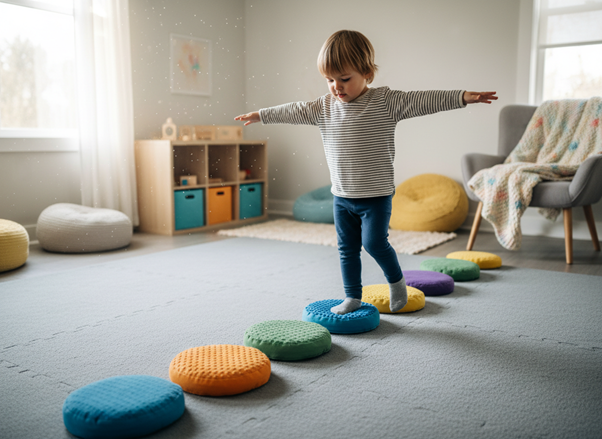
Sensory-motor development is the process by which children learn to use their senses and their bodies together to move, explore, learn, and interact with the world. It forms the foundation for almost every skill a child will eventually master—balance, handwriting, emotional regulation, attention, reading, and even social interaction.
From infancy onward, children gather information through their senses—touch, movement, sight, sound, and body awareness—and their brain processes these signals to create coordinated actions. Over time, these sensory experiences strengthen neural pathways, helping children move with confidence, react appropriately to sensory input, and build the skills needed for school and daily life.
Why Sensory Motor Development Matters
A strong sensory motor foundation gives children the ability to:
- Maintain balance and posture
- Plan and sequence movements
- Use both sides of the body together
- Control fine motor tasks such as writing and buttoning
- Focus, self-regulate, and manage emotions
- Participate fully in play, school, and everyday routines
When sensory motor development is delayed, children may appear clumsy, avoid physical activities, struggle with handwriting, or become easily overwhelmed by sensory stimuli. These challenges can impact their confidence and performance at home and school.
The Sensory Systems Involved
Sensory motor development relies on several key systems:
- Vestibular system (movement and balance)
Helps children know where their bodies are in space and supports coordinated movement. - Proprioception (body awareness)
Gives feedback from muscles and joints, helping children judge force, pressure, and movement. - Tactile system (touch)
Supports exploration, fine motor skills, and emotional regulation. - Visual and auditory processing
Helps children take in their surroundings and respond appropriately.
These systems work together to help children climb, write, jump, focus in class, and participate confidently in daily life.
Signs of Delayed Sensory Motor Development
- Poor balance or frequent tripping
- Avoiding playground equipment
- Difficulty sitting upright
- Challenges with handwriting
- Trouble following multi‑step instructions
- Sensitivity to noise, movement, or touch
- Difficulty coordinating both sides of the body
If several of these signs appear consistently, additional support can be helpful.
How to Support Sensory Motor Development at Home
The best support combines fun movement play with consistent practice. Activities like animal walks, obstacle courses, balancing games, crawling, climbing, and jumping help strengthen the sensory systems.
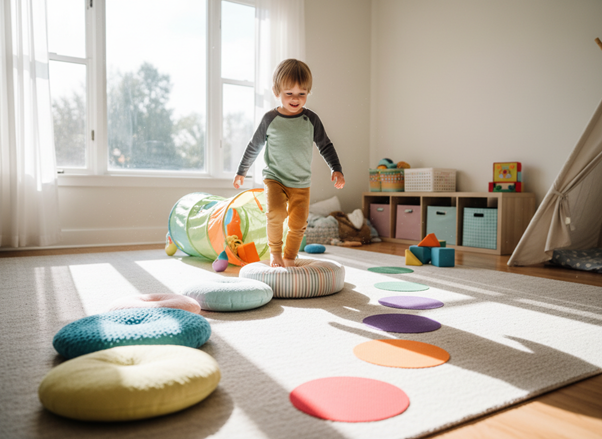
Regular sensory-rich movement gives the brain what it needs to organise information and develop stronger motor skills.
How CoordiKids Strengthens Sensory Motor Development
CoordiKids provides a structured, therapist-designed online program that children can follow at home in just 15 minutes a day. The exercises target the vestibular, proprioceptive, tactile, and visual systems, building the foundation for:
- Better coordination
- Improved handwriting
- Stronger attention and learning
- Emotional and sensory regulation
- Greater confidence in daily tasks
Parents don’t need special equipment or training—just a small space and a device to follow along. Thousands of families have used CoordiKids to help their children thrive through simple, effective movement programs.